Fence gates in Cleveland that swing true, latch clean and fit the mower
The gate is the only part of a fence that moves, and that makes it the part that fails first. A run of panels can stand quietly for twenty winters while the gate beside it sags, drags across the walk and stops latching by the second spring. Most of those problems trace back to choices made on day one: a gate built too wide for its post, a frame with no bracing, light hinges, or a hinge post set no deeper than the rest of the line in wet Cuyahoga County clay. Below: gate types, sizing, framing, hinge posts, hardware, frost movement, repairs and automation.
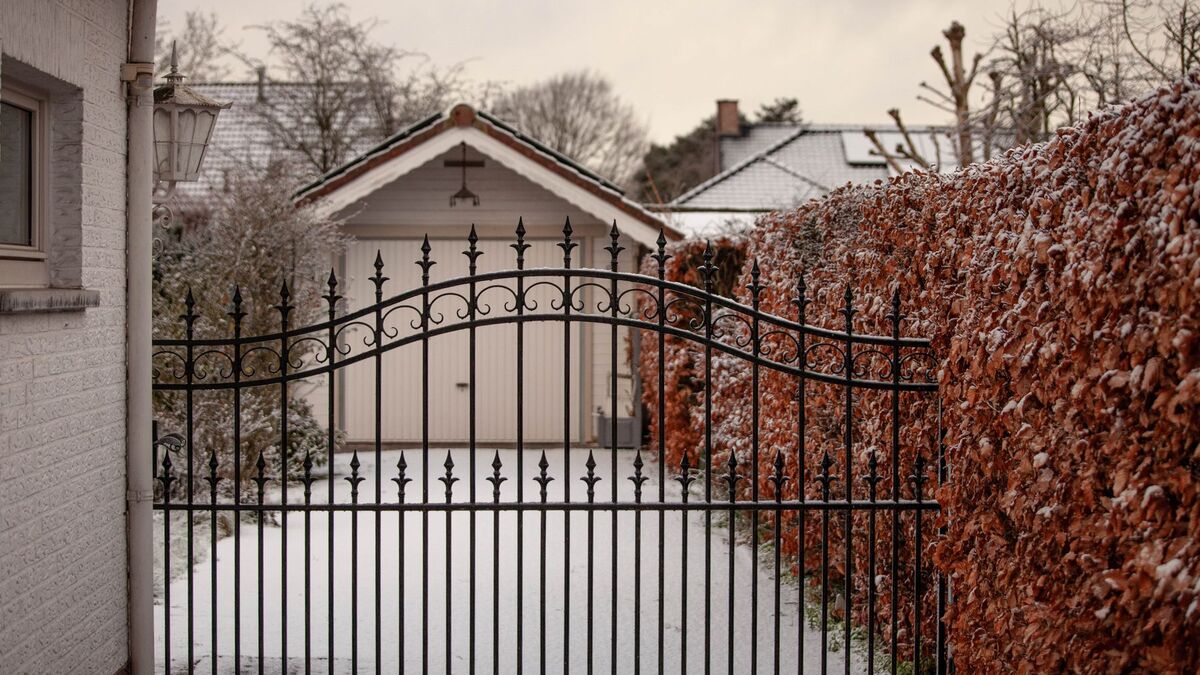
Walk gates, double drive gates, sliding gates and cantilever gates
A single walk gate handles people, wheelbarrows and trash cans, and it is the gate most yards need at least one of. When the opening has to pass a vehicle, a single leaf gets heavy and long very fast, so most drive openings are split into a double gate that meets in the middle, which halves the load on each hinge post.
Sliding gates roll sideways along a track instead of swinging, which saves the space a swing gate needs and works where a driveway slopes up toward the garage. Cantilever gates also slide, but they hang from rollers mounted on posts beside the opening and never touch the ground across the gap.
Sizing a gate to the mower, the snow blower and the trailer
The most common gate complaint is not sagging; it is a gate that turned out to be too narrow. People size the gate to the walkway and then discover the riding mower, the snow blower with its chute, or the wheelbarrow with a full load will not clear the posts and hardware. Measure the widest thing that will ever pass, then add a comfortable margin on each side for steering, especially if you will be backing through it.
Remember that the clear opening is smaller than the post-to-post spacing once hinges and latches take their share. A drive gate needs room for mirrors, trailer fenders and the machine a future patio or garage project will bring. On narrow inner-ring lots with shared driveways, a gate that swings across a neighbor's side can cause friction; that is one place a sliding option or a narrower leaf makes sense. Planning a whole new line? See fence installation.
Framing and diagonal bracing that keep a gate square
A gate is a rectangle hanging from one side, and gravity is always trying to fold it into a parallelogram. The frame is what fights back. On a wood gate the frame is usually a perimeter of rails with a diagonal brace, and its direction matters. A wood brace works in compression, so it belongs low at the hinge edge and climbs diagonally to the high corner where the latch sits. Put it the other way and it does almost nothing.
Cable and turnbuckle kits work the opposite way, in tension, running from the top hinge corner down to the bottom latch corner and pulling the latch side back up as it drops. Many wood gates are now built over a welded steel or aluminum frame that holds square far longer than lumber alone, and vinyl gates rely on aluminum inserts in the rails; the reasons are explained on the vinyl fence page.
Why hinge posts need heavier footings than the rest of the fence
A line post holds up a panel and resists wind. A hinge post does that and carries a lever. The weight of the gate hangs off one side of the post, and every push, every child swinging on it and every gust off Lake Erie tries to tip the post toward the opening. A post sized and set like an ordinary line post will slowly lean, and the gate drops with it.
The fix is built in from the start: a larger post where the material allows it, a deeper and wider concrete footing. The footing has to go below the depth that frost reaches in a Northeast Ohio winter, and the local building department sets what that depth is for your address. Clay that holds water and then freezes will grip and lift a footing with flared sides, so a clean straight-sided hole with gravel at the bottom matters even more for a hinge post than for the rest of the fence.
Hinges: strap, barrel, adjustable and spring styles
Hinges are cheap compared with the gate, and skimping on them is a false economy. The hardware should be rated for the weight and width of the leaf, fastened with through-bolts or long structural screws rather than short wood screws, and coated or made of stainless steel so it does not rust and stain the wood beneath it.
- Strap hinges spread the load along the top and bottom rails and suit heavier wood gates.
- Heavy barrel or bolt-through hinges carry large drive gates and let the leaf swing farther open.
- Adjustable hinges let the gate be raised, lowered or squared without removing it, which is worth having in a climate where posts move a little every winter.
- Spring and tension hinges close the gate on their own and are standard on pool gates and on yards with dogs.
Latches, drop rods and cane bolts
The latch decides whether the gate actually stays shut. A gravity latch, with a bar that drops into a catch, is the simple workhorse and works well when the gate is square. Lockable latches matter on gates facing an alley or street.
Double drive gates need a way to hold the inactive leaf still. A drop rod or cane bolt slides down from the bottom of that leaf into a sleeve set in the ground or the driveway, and the active leaf latches to it. In winter the sleeve can fill with ice or packed snow, so a sleeve set in concrete with a drain path below, or a surface-mounted stop on a sloped drive, keeps the rod usable in January.
Self-closing hardware and gates that have to shut on their own
Spring hinges, hydraulic closers and tension hinges all pull a gate shut after it is released. Simple springs are inexpensive but slam the gate and wear the latch; hydraulic closers control the speed and still pull hard enough at the end to engage the catch.
For a dog yard, a self-closer is a convenience that prevents the gate left open by a visitor. For a pool, it is a requirement, and the specific rules for barrier gates, along with the latch and spacing details the adopted code sets, are covered on the aluminum fence page. Any self-closing gate should be tested from several opening angles, including just barely ajar, because that last few inches is where weak closers fail.
How frost heave, clay and wet wood make gates sag and drag
Northeast Ohio is hard on gates. Freeze-thaw cycles come and go all winter, and water trapped in heavy clay expands as it freezes and pushes on anything set into it. A hinge post that heaves even slightly tilts the gate, and a latch post that rises or drops throws off the catch.
Wood adds its own movement. Pickets and rails soak up rain and snowmelt, swell, and grow heavier, which adds weight to the hinge side right when the ground is least stable. Snow is the final factor: a drift or a plow ridge against the bottom of a swing gate can lock it shut or pry it out of square when someone forces it.
Fixing a gate that drags or will not latch
Before buying new hardware, find out which part moved. Work through it in order:
- Check the hinge post with a level on two faces. If it leans toward the opening, the post or its footing is the problem and no hardware change will last.
- Check the latch post the same way, since a heaved latch post will throw the catch out of line even when the gate itself is fine.
- Hold a level across the top rail of the gate. If the posts are plumb but the latch side has dropped, the frame has racked.
- Tighten or replace loose hinge fasteners, moving to through-bolts or longer screws into solid wood.
- Square a racked wood gate by lifting the latch corner and adding or correcting the diagonal brace, or install a cable and turnbuckle kit.
- Reset or replace a leaning hinge post with a deeper, cleaner footing if the post itself has moved.
Sliding and cantilever gates on Greater Cleveland driveways
Sliding gates suit tight lots and sloped drives, but the track is the weak spot. Ground tracks fill with snow, ice, leaves and grit, and a plow or a shovel can bend them.
Cantilever gates avoid the track by riding on roller carriages mounted to posts beside the opening, with a tail section that extends past the posts to balance the leaf. They need clear space alongside the fence for that tail to travel, plus heavy posts and solid footings, because the whole gate hangs off them. Gate concerns tied to specific communities, such as the narrow lots in Lakewood, are noted on the area pages.
Gate automation in general terms
Swing and sliding gates can both be motorized. Swing openers mount on the gate and post and push or pull the leaf; slide openers drive a chain or gear rack along the gate. Either one needs a gate that is already square and free-moving, since a motor will only amplify a binding problem. They also need power at the opening, which usually means an electrician and a buried line.
Automated gates should have obstruction sensing and photo eyes so they stop or reverse when something is in the way, plus a manual release for power outages. Ice, snow load on solid leaves and cold batteries all test reliability here. Permit questions for the opener go to the city building department.
What changes the price of a gate and how to start
Gates are priced as part of the fence or as a stand-alone project after the contractor sees the opening. The main cost drivers are the width and number of leaves, the material and frame, hardware grade and any self-closing or lockable sets, the size and footing of the hinge and latch posts, the slope of the ground under the swing, and whether an opener or sliding system is involved.
If you have a gate that needs fixing, or a new opening you want to plan, start on the contact page. Send the address and a few photos, including one of each post with a level against it if you can, and a residential fence contractor working the region will follow up about a visit.
Fence gates in Cleveland that swing true — common questions
How wide should a fence gate be for a riding mower?
Measure the mower at its widest point, which is usually the deck or the side discharge chute rather than the wheels, and then add generous clearance on both sides so you can steer through without scraping the posts. Remember that hinges and the latch eat into the opening. If a tractor with a trailer or a snow blower attachment might ever use the gate, measure that too. When in doubt, a double gate gives you a narrow everyday leaf and a wide opening when you need it.
Why does my gate stick in winter but swing fine in summer?
Almost always, the ground is moving. Wet clay freezes and expands, pushing the hinge post or the latch post up or out of plumb, and the gate shifts with it. Snow and ice under the bottom rail add drag. In spring the ground thaws and settles, and the gate behaves again. An adjustable hinge helps with small shifts, but a gate that binds every winter usually needs a hinge post reset in a deeper, straight-sided footing below the frost line.
Can a gate be added to an existing fence?
Usually, yes. The contractor cuts an opening in the run and installs new hinge and latch posts, because an existing line post is rarely strong enough to carry a gate. The new gate can often be built to match the old fence, though weathered wood or an older vinyl or aluminum style may look slightly different at first. Ask whether old line post footings will be pulled or left.
Is a single driveway gate or a double gate better?
For most residential driveways, a double gate is the better build. Splitting the opening into two leaves halves the weight on each hinge post, reduces sag and needs less swing room in front of the gate. A single wide leaf can work with a very heavy post and frame, or as a sliding gate, but it puts a lot of leverage on one footing. Double gates do need a drop rod or cane bolt and a sleeve in the ground to hold the inactive leaf.
Do anti-sag kits actually fix a sagging gate?
They help when the frame has racked and the posts are still plumb. A cable runs diagonally from the top hinge corner to the bottom latch corner, and a turnbuckle tightens it to pull the latch side back up. They are cheap and quick to install. They will not fix a gate that sags because the hinge post is leaning or the hinges have pulled loose, and over-tightening can bow the frame. Check the posts with a level first.
Should a fence gate swing into the yard or out?
Most yard gates swing inward so they do not open over a sidewalk, driveway or a neighbor's property, and so the hinges sit on the private side. Grade also decides it: a gate must swing toward the downhill side or it will hit the ground. Pool gates are the main exception, since barrier rules usually require them to swing outward, away from the water. On a sloped walk, a contractor may raise the gate or use rising hinges to clear the ground.
Talk through your site
Start with the address, what you want done, and a few photographs of the area, including anywhere water sits after a heavy rain.
Related work
Fence Installation
New fences on Northeast Ohio clay, set below the frost line, with permits, gates and grade handled.
Fence Repair
Lake-wind damage, heaved posts, rotted rails and gates that drag, and when to stop patching.
Wood Fences
Cedar and treated pine privacy and picket styles and how wood lasts in wet, snowy winters.
Vinyl Fences
Vinyl privacy and picket fences, the grades that resist cold cracking and how to judge them.
Aluminum Fences
Ornamental aluminum for pools, front yards and older homes where an open look fits.
Across the metro
Lakewood
Dense older housing with narrow lots, shared driveways and strong winds off the lake.
Parma
Postwar bungalows and ranches on regular lots with dogs, pools and tired original fences.
Strongsville
Southwest suburb with larger lots, subdivision rules and heavy clay that holds water.
Westlake
West-side suburb with newer homes, association standards and lake-effect snow.